We prepare for contractions, but what about the pauses?
Posted on October 12, 2026 | By Danielle Springall
When I think back to my labour with my first baby, Paisley, I remember the midwives being concerned about changes in her heart rate around contractions. At the time, I didn’t fully understand what they were looking for.
Learning more about what happens between contractions has made me think about those pauses differently. It doesn’t tell me exactly what was happening during my own labour, but it has helped me understand why the time between contractions matters.
We spend so much time preparing for contractions themselves. How will they feel? How will we breathe through them? What might help when they become more intense?
But what about the moments in between?
Those pauses give you an opportunity to recover, and they’re important for your baby too.
What happens during a contraction and afterwards
During a contraction, the muscles of your uterus tighten. In the first stage of labour, contractions help your cervix thin and open. Once your cervix is fully open, contractions help move your baby down through the birth canal, and you may feel an urge to push. NHS stages of labour guide.
Contractions can temporarily reduce the flow of your blood through the placenta, where oxygen passes to your baby. As the muscles relax, blood flow is restored, supporting your baby’s recovery before the next contraction. The pause is an important part of labour’s rhythm… this was the part I hadn’t really thought about before. Even when the intensity eases, there’s still something important happening inside your body.
For you, that pause can also be a chance to rest physically and mentally after the contraction you’ve just experienced. You don’t have to make this happen with a perfect breathing technique, your uterus naturally relaxes and tightens as part of the contraction cycle. The options below are simply different ways to help you feel more comfortable and supported while that’s happening.

Five things to try between contractions
1. Let yourself rest
When a contraction eases, see whether you can consciously let your shoulders drop, release your hands or rest your head on something nearby. Notice where you’re still holding tension and whether you can get a little more comfortable.
Find somewhere you feel supported, that might mean resting on your side with pillows or leaning forward onto a comfortable surface. In early labour, when the gaps may be longer, you might even be able to doze.
Despite being told that being mobile during labour can really help keep things progressing, remember, you don’t have to keep moving all the time. Rest is an option too, and NHS advice for early labour includes allowing your body to rest as a contraction wears off. Cambridge University Hospitals’ early labour guide.
For your birth partner: You don’t need to have the perfect thing to say or do. Sometimes getting a pillow into the right place and being there quietly is exactly what’s needed.
2. Come back to comfortable breathing
You might be using a particular breathing technique during each contraction. Once it passes, remind yourself to breathe comfortably.
During my hypnobirthing course, we practise a “calm breathing” method: breathing in for a count of four and out for a count of seven. You can use this during contractions as something to focus on, or between them to help you settle, if it feels comfortable.
There’s no need to force a longer breath or stick to those numbers. If counting starts to irritate you, leave it behind. Breathing and relaxation techniques are there to help you feel more comfortable, rather than become another thing to get right. NHS advice on coping with labour.
You might find it helpful to think, “That one has finished,” and bring your attention back to how you feel now. I found that saying out loud, “That’s another one down, one step closer to meeting my baby,” really helped.
For your birth partner: If you’ve practised breathing together and it helps, join in gently. Pay attention to her response – sometimes she’ll want your guidance and sometimes she’ll want a moment of quiet.
3. Check what would make you more comfortable
Are you thirsty? Too warm? Ready for something to eat?
The gap can be a useful moment for a sip of drink if you’re thirsty. You don’t need to force fluids or drink more than normal. Something light to eat may also help you maintain your energy, depending on your care team’s advice. NICE guidance on eating and drinking in labour. I remember snacking on Pringles and Jelly Babies through labour!
Or maybe you’re starting to get a sweat on and want to take off a layer of clothing. Use this moment to make yourself a little more comfortable.
You don’t need to run through a whole checklist after every contraction. One small adjustment might be all you want.
For your birth partner: Keep a drink within reach and offer it without pressure. A simple “Would you like a sip?” may be easier to answer than “What do you need?”

4. Choose the touch (or quiet) you want
You might want a hand to hold, gentle massage or a few reassuring words. You might want nobody to touch you at all.
And this might change as you progress through labour. From experience, I can tell you that something that felt lovely twenty minutes ago might suddenly make your skin crawl! You’re allowed to change your mind.
Massage is one option the NHS suggests for comfort in early labour. Let how it feels guide whether you want it to continue, I remember small circles on the bottom of my back felt heavenly during early labour.
For your birth partner: Try not to take a change of mind personally. If she asks you to stop touching or talking, you can still support her by staying close and respecting what she needs.
5. Find a position that feels good now
The position that helped during the contraction might not be where you want to stay afterwards.
You might want to gently sway, change position or settle into supported rest. Your midwife can help you find comfortable options that work with your care, including when you have monitoring or an epidural.
For your birth partner: Help her get into the position she wants. Pillows and practical support can make moving take less effort. Give her time to settle before suggesting something else.
You don’t need to do all five
You won’t need a checklist running through your head between contractions. You might want a drink and quiet. You might want your partner’s hand, a change of position or a moment with your eyes closed.
The point is to have options and feel able to say what you want for your body. It’s also really helpful to have a birth partner who understands how to support you as your needs change.
What I wish I’d understood more clearly is that the pauses have a purpose too. They’re part of the rhythm of labour, and you’re allowed to rest within them.
Preparing together for birth
This is the kind of practical preparation we explore in my antenatal and hypnobirthing course: understanding what’s happening in your body, finding tools that feel useful to you, and helping your birth partner feel involved and prepared.
We talk about how those tools might work in real moments during labour – when you need comfort, when your preferences change and when your partner wants to help but isn’t sure how.
If you’d like to explore these ideas together before your baby arrives, take a look at my antenatal and hypnobirthing course. I’d love to help you both feel more prepared for birth.

I’m Danielle, founder of The Mama Spring.
I run antenatal + hypnobirthing courses and baby classes in Grimsby, creating calm spaces where parents can learn, connect, and realise they’re more capable than they think.
If you found this useful, you may also like the following journals:
Why Preparing for Birth Takes More Than Antenatal Classes – An honest article about why I don’t think a standard antenatal class is always enough.
Birth Isn’t a Solo Experience – This one’s about how your birth partner can make a difference during labour and birth.
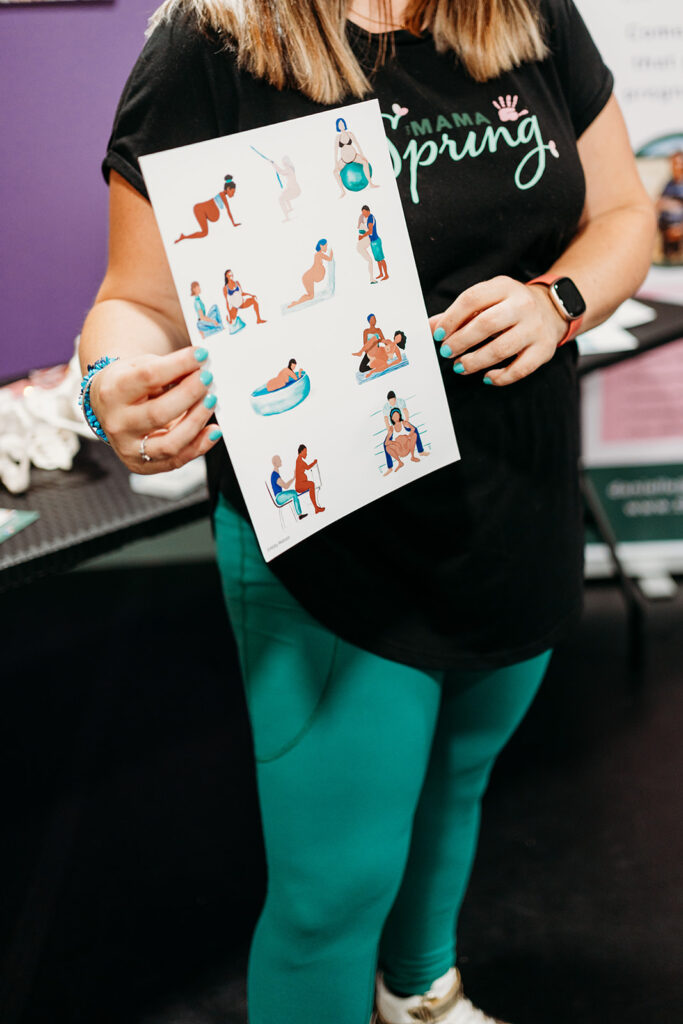
Discover more about my Antenatal + Hypnobirthing Courses

Read about the benefits of Baby Massage

Read more about the benefits of hypnobirthing